 By Meghna Sharma
 India’s private-security industry has become one of the country’s largest employment-intensive service sectors. The Central Association of Private Security Industry says it represents about 10 million guards and women and roughly 35,000 private security agencies operating across India. Demand comes from factories, IT parks, hospitals, banks, logistics hubs, residential communities, airports and major infrastructure projects.
The business is also changing. Large clients increasingly expect more than guards at gates. CCTV analytics, access control, command centres, remote surveillance, background verification and digital attendance are being combined with trained manpower. This shift toward technology-assisted security is pushing the biggest providers to invest in training, compliance and integrated monitoring.
Here are the Top 10 Security Companies in India in 2026, selected for workforce scale, national reach, client footprint, service breadth, technology capability and current relevance.
1. SIS Limited
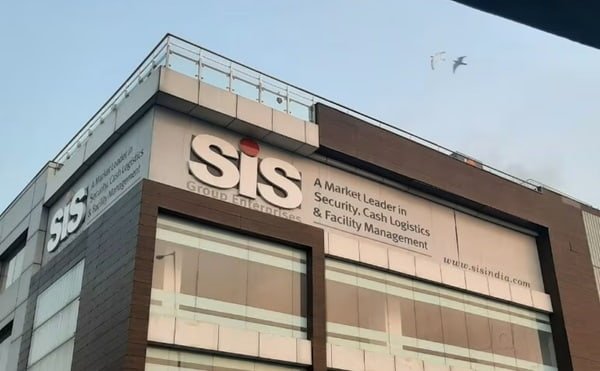
SIS Limited is India’s largest security-solutions company by current disclosed scale. Its Security Solutions India business operates across 247 branches and had about 2,49,286 employees as of March 2026. The segment includes brands such as SIS, SISCO, AP Securitas, Tech SIS and SIS Alarm.
In Q4 FY2025-26, Security Solutions India generated ₹1,925 crore in revenue. SIS also uses AI surveillance, drone security, digital operating platforms and integrated monitoring, while its acquisition of A P Securitas further strengthened its national footprint.
2. G4S India
G4S India, part of Allied Universal, is one of the country’s largest and most recognisable private-security providers. Founded in India in 1989, it reports more than 1,35,000 employees and over 131 branches and area offices.
Its services cover guarding, security systems, consultancy, risk management, training and integrated facility management across aviation, healthcare, finance, government, industry and transport. Its manpower scale and global security expertise keep it near the top of the market.
3. Peregrine Guarding
Peregrine Guarding, part of Tenon Group, is one of India’s largest home-grown integrated security companies. Founded in 1995, it says it serves more than 3,100 clients in over 2,500 cities and employs more than 1,00,000 people globally.
Its services include manned guarding, electronic security, executive protection, event security, risk assessment and remote surveillance. Peregrine has also adopted virtual guard tours and command-and-control systems to combine manpower with technology.
4. Securitas India
Securitas India combines the global expertise of Securitas AB with the Indian experience of the Walsons Group. It provides specialised guarding, electronic security, escort services, executive protection, risk management and background verification.
The company has about 50,000 trained employees in India and a broad pan-India presence. Its operating model increasingly combines personnel with technology, data and real-time tasking rather than treating guarding as a standalone manpower service.
5. Terrier Security Services
Terrier Security Services has more than three decades of experience and is now part of Bluspring, the Quess-backed infrastructure-services platform. Terrier reports operations across 24 states and more than 2,400 sites.
Its model combines manned guarding with AI-enabled surveillance, access control, facial recognition, command centres and digital workforce tools. This makes it particularly strong in large corporate and manufacturing environments where technology and compliance are central to security.
6. BVG India – Security Services
BVG India is best known for integrated facility management, but security is an important part of its offering through wholly owned BVG Security Services. The wider BVG group reported more than 91,000 people, 1,400-plus customers and over 2,500 sites across 29 states and union territories as of March 2026.
BVG combines security personnel, surveillance and access control with housekeeping, engineering and emergency-response services, making it relevant for large clients seeking one integrated service provider.
7. Checkmate Security Solutions
Pune-based Checkmate Security Solutions has a strong position in corporate, industrial and banking security. It reports more than 12,000 security personnel, 800-plus client sites and over 11,000 sites under electronic surveillance across 16 states and union territories.
Its services cover guarding, remote surveillance, systems integration and facility management. Checkmate also operates its own accredited training facility and holds ISO 18788 certification for private security operations.
8. Premier Shield
Premier Shield is one of India’s older private-security and risk-management groups, established in 1976. Its services extend beyond guarding into investigations, background checks, computer forensics, cash management and executive protection.
Public company material describes around 1,500 active clients and more than 18,000 personnel across India and overseas markets. Its long history and specialist risk-management capabilities give it a wider profile than a conventional guarding contractor.
9. Globe Security Solutions
Globe Security Solutions has developed a sizeable presence across corporate and industrial clients. The company says it has more than 10,000 security professionals and operates across 20 states and union territories.
Its services include guarding, surveillance, technical support and facility management. A broad client base across manufacturing, real estate, education and corporate facilities has helped it build a significant national footprint.
10. G7 Securitas Group
Mumbai-based G7 Securitas Group is a long-established security organisation operating across major Indian metros. Its services include manned guarding, aviation security, investigations, executive protection and security consulting.
The group is particularly associated with specialist assignments supported by former military, police and investigative professionals. Its long operating history and specialised expertise keep it among India’s notable security providers.
What Is Changing in India’s Private Security Industry?
The biggest change is the move from manpower-only guarding to integrated protection. Cameras, video analytics, biometric access, visitor-management systems and remote command centres are increasingly linked with on-ground teams, improving visibility and incident response.
Compliance is equally important. Under the Private Security Agencies (Regulation) Act, agencies require a licence from the relevant State or Union Territory controlling authority. Licences are state-specific and generally valid for five years. Large customers should also check training standards, wage compliance, PF and ESI processes, insurance and background-verification systems.
Conclusion
India’s security-services market in 2026 is large but highly fragmented. SIS and G4S lead by disclosed manpower scale, while Peregrine and Securitas provide substantial national networks. Terrier and BVG show how security is becoming integrated with technology and wider facility services, while Checkmate, Premier Shield, Globe and G7 add specialist strength.
The strongest companies will be those that combine trained personnel with reliable technology, statutory compliance, supervision and measurable response standards. For customers, the best security company is not simply the one with the most guards, but the one that matches its operating model to the risks of a particular site.
FAQs
Q1. How can a company check whether a security agency is legally authorised to operate?
Ask for the agency’s valid PSARA licence for the state where guards will be deployed. Businesses should also verify GST, PF, ESI and contract-labour registrations where applicable rather than relying only on marketing material.
Q2. Is the cheapest security-guard quotation usually the best option?
Not necessarily. Guarding is labour-intensive, so an unusually low quote can indicate unrealistic wage assumptions, weak supervision or poor compliance. Buyers should compare training, supervisory ratios, replacement policy, insurance and statutory payments along with price.
Q3. What is the difference between a security company and a general manpower agency?
A professional security company is specifically licensed to provide private security and should train personnel for guarding, access control and incident response. A general staffing company cannot automatically provide regulated security services without the required licences.
Q4. Can private security companies provide armed guards in India?
Armed deployment is possible in suitable situations, but it is subject to additional legal and licensing requirements, including rules governing firearms and the personnel carrying them. A normal guarding contract does not automatically permit armed deployment.
Q5. What should be included in a corporate security contract?
The contract should clearly define manpower strength, shifts, post instructions, supervision, training, incident reporting, replacement timelines, statutory payments, insurance, technology responsibilities and escalation procedures. These details matter as much as the monthly price.