 By TBLTeam
 Choosing the right toilet style plays a key role in how comfortable and functional your bathroom feels every day. In many Indian homes, the decision often comes down to a traditional Indian toilet and a modern wall-hung toilet. Each option reflects a different approach to design, usage, and space planning. While one focuses on simplicity and practicality, the other offers a cleaner, more contemporary look. Understanding how these two options differ can help you select a solution that suits your routine, space, and overall bathroom layout.
What Is an Indian Toilet?
An Indian toilet is a floor-level fixture designed for use in a squatting position. It has been widely used in Indian households for years and remains a practical option.
Its structure is simple, with minimal components and no attached seat. This makes installation straightforward and reduces the chances of wear and tear over time. The design is built directly into the floor, which allows it to fit well in compact spaces.
This type of toilet works especially well in smaller bathrooms and high-use areas. Its durability and ease of maintenance make it a reliable choice for everyday use. For households that prioritise practicality and long-term performance, it remains a suitable option.
What Is a Wall-Hung Toilet?
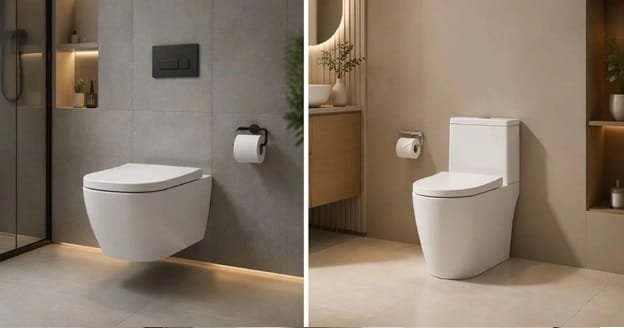
A wall hung toilet is a modern fixture mounted directly onto the wall, with the flush tank concealed behind it. This creates a floating effect that keeps the floor visible and the design clean. It is designed for a seated position, making it more comfortable for a wider range of users. The structure supports ease of use and is particularly helpful for elderly individuals and children.
This type of toilet is commonly used in contemporary bathrooms where design and space planning are important. It also allows easier floor cleaning due to the open area beneath the fixture. Overall, it offers a more refined and organised appearance.
Practical Comparison: Indian Toilet vs Wall-Hung Toilet
When choosing between an Indian toilet and a wall-hung toilet, understanding their practical differences helps ensure better comfort, space use, and long-term convenience.
| Aspect | Indian Toilet | Wall-Hung Toilet |
| Usage and Comfort | Requires a squatting posture, suitable for users accustomed to it | Supports a seated position, offering greater comfort and ease |
| Space and Layout | Fits well in compact bathrooms due to its floor-level design | Creates a more open and spacious look, but needs proper wall support |
| Installation | Simple installation with minimal structural changes | Requires a concealed system and a strong wall backing |
| Maintenance and Cleaning | Easier to maintain due to fewer components | Floor cleaning is easier, but concealed parts need access |
| Durability | Highly durable with a simple structure | Durable when installed correctly and supported well |
Choosing Based on Lifestyle and Space
Your daily routine and household needs should guide your decision. An Indian toilet suits homes where users are comfortable squatting. It is also ideal for compact bathrooms or areas where durability and simple maintenance are priorities. A wall-hung toilet works well in modern homes where comfort and convenience matter. It is especially useful for families with elderly members or children who prefer a seated option.
Many homeowners opt for a mixed approach to suit different needs within the same home. A common setup is placing an Indian toilet in a secondary or utility bathroom for practicality, while reserving a wall-hung toilet for the main bathroom to achieve a cleaner, more modern look. For instance, brands like Simpolo Tiles & Bathware offer options in both formats, which can help when planning a bathroom layout that prioritises function and design consistency.
Practical Considerations Before Installation
Before finalising your choice, it is important to evaluate a few practical aspects that influence installation and long-term usability.
- Bathroom layout compatibility: Ensure the available space and layout can support the fixture comfortably without restricting movement.
- Installation requirements: Check structural needs, especially for wall-hung toilets that require concealed systems and strong wall support.
- Ease of maintenance: Consider how accessible the fixture is for cleaning and whether internal components can be serviced easily.
- Durability over time: Choose a fixture that can handle regular use while maintaining its finish and performance.
Reviewing these factors helps create a bathroom setup that remains efficient, practical, and easy to manage over time.
Conclusion
Both the Indian toilet and the wall-hung toilet offer distinct advantages. One focuses on simplicity, durability, and efficient use of space, while the other brings comfort and a modern design approach. The right choice depends on how your bathroom is used and what matters most in your daily routine. By carefully considering your needs, you can create a space that feels both practical and comfortable.
 Meghna Sharma