 By TBLTeam
 The franchise business model has become one of India’s most popular paths to entrepreneurship in 2026. For thousands of first-time business owners, buying an established franchise feels safer than starting a new brand from scratch. The product is already tested. The supply chain works. The customer recognition is built. All the franchisee has to do is invest the capital, follow the system, and focus on local execution. In a country where 80 percent of new independent businesses fail within the first three years, franchises offer a structured path with a much higher success rate.
Speak to any successful franchise owner in India today and the logic is clear. A good franchise is not just a business. It is a ready-made blueprint with national brand backing, training support, and proven margins. Indian consumers, especially in Tier 2 and Tier 3 cities, trust branded outlets more than unknown local names. Franchising has also expanded beyond food and retail into education, healthcare, logistics, and even salon chains. However, not every franchise is profitable. Success depends on picking the right brand, the right location, and understanding the real cost of ownership behind the glossy marketing brochures.
Here are the 10 most profitable franchise businesses in India in 2026.
1. Amul Ice Cream and Dairy Parlour
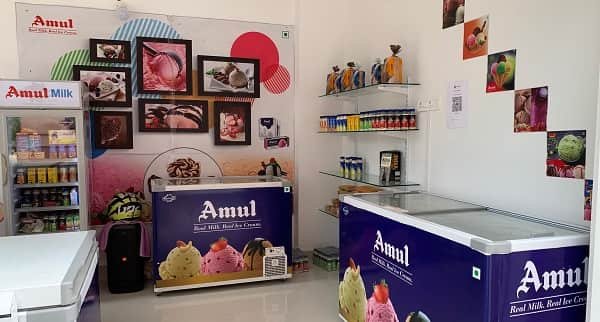
Amul remains India’s most trusted dairy brand, and its parlour franchise is one of the cheapest yet most profitable options in the country.
Why it works: Daily footfall is high due to impulse ice cream and dairy purchases. Margins are 15 to 25 percent, with minimal wastage. Brand trust is absolute.
Investment: ₹2 to ₹6 lakh including deposit, interiors, and equipment.
Expected income: ₹40,000 to ₹1.5 lakh per month.
Best fit: High-footfall streets, markets, residential colonies.
2. Domino’s Pizza Franchise
Domino’s, operated by Jubilant FoodWorks, is one of India’s most successful QSR brands with over 2,000 outlets.
Why it works: Strong brand recall, reliable supply chain, high delivery volumes, and tech-led operations. Weekly dinners and weekend family orders keep revenue steady.
Investment: ₹50 lakh to ₹1.2 crore including equipment, setup, and franchise fees.
Expected income: ₹6 lakh to ₹20 lakh per month in strong locations.
Best fit: Corporate-backed investors, high-traffic malls, and commercial zones.
3. Lenskart Eyewear Store
Lenskart’s franchise model has expanded aggressively into Tier 2 and Tier 3 cities with its FOFO (Franchise-Owned, Franchise-Operated) format.
Why it works: Eyewear is a high-margin, low-inventory business. Growing vision problems due to screen time have pushed demand massively. Brand offers full training, design software, and marketing support.
Investment: ₹25 lakh to ₹40 lakh including inventory, interior, and franchise fees.
Expected income: ₹2 lakh to ₹6 lakh per month.
Best fit: Busy shopping streets in Tier 2 and Tier 3 cities.
4. PhysicsWallah (PW) Offline Coaching Centre
PhysicsWallah has disrupted the Indian coaching industry with affordable pricing and is expanding offline through PW Vidyapeeth and franchise models.
Why it works: India’s coaching industry is worth over ₹1.5 lakh crore. PW brand enjoys massive student loyalty. Parents in Tier 2 and Tier 3 cities happily enrol children in PW centres for JEE, NEET, UPSC, and school-level coaching.
Investment: ₹25 lakh to ₹60 lakh including setup, deposit, and royalty.
Expected income: ₹2 lakh to ₹8 lakh per month.
Best fit: Tier 2 and Tier 3 cities with strong student populations.
5. Tata Cliq or Reliance Smart Bazaar Kirana Franchise
Modern kirana franchises from Tata and Reliance have transformed traditional grocery retail with technology, inventory support, and local branding.
Why it works: Grocery is recession-proof. Tata and Reliance provide supply chain, billing software, and private label products. A neighbourhood branded kirana earns steady monthly income through daily family purchases.
Investment: ₹15 lakh to ₹40 lakh depending on format size.
Expected income: ₹1.5 lakh to ₹5 lakh per month.
Best fit: Residential colonies, gated societies, semi-urban markets.
6. Naturals Ice Cream or Baskin Robbins Outlet
Premium ice cream franchises like Naturals (for regional flavours) and Baskin Robbins (for international variety) have strong brand loyalty and consistent demand.
Why it works: Rising disposable income has pushed demand for premium ice cream. Families eat out 2 to 3 times a month. Kiosks and mall outlets run at full capacity on weekends.
Investment: ₹20 lakh to ₹40 lakh for Baskin Robbins. ₹10 lakh to ₹25 lakh for Naturals.
Expected income: ₹1.5 lakh to ₹4 lakh per month.
Best fit: Malls, markets, premium residential neighbourhoods.
7. Apollo Pharmacy or MedPlus Franchise
India’s organised pharmacy sector is booming, and both Apollo Pharmacy and MedPlus offer strong franchise opportunities.
Why it works: Healthcare spending has crossed ₹12 lakh crore in India. Chronic diseases like diabetes and BP bring repeat monthly customers. Branded pharmacies are trusted over unknown local shops. 24-hour branches generate strong night-time revenue.
Investment: ₹15 lakh to ₹35 lakh including inventory, deposit, and setup.
Expected income: ₹1.5 lakh to ₹4 lakh per month.
Best fit: Near hospitals, residential clusters, and busy markets.
8. Delhivery, Blue Dart, or DTDC Courier Franchise
Courier and logistics franchises have become highly profitable thanks to the e-commerce boom in Tier 2 and Tier 3 cities.
Why it works: Amazon, Flipkart, Meesho, and D2C brands generate millions of parcels daily. Local delivery partners earn per-parcel commissions and additional margin on return handling. Minimal inventory, simple operations, and steady growth make this a safe franchise category.
Investment: ₹3 lakh to ₹10 lakh including deposit, vehicle, and setup.
Expected income: ₹50,000 to ₹2 lakh per month.
Best fit: Tier 2 and Tier 3 cities with rising e-commerce penetration.
9. Kidzee or EuroKids Preschool Franchise
Early childhood education has become a serious industry in India, with branded preschools commanding premium fees.
Why it works: Dual-income urban families are willing to pay ₹8,000 to ₹25,000 monthly fees for quality pre-primary education. Kidzee, EuroKids, Bachpan, and Hello Kids offer strong training support, curriculum design, and parent outreach. Student retention is high once the brand reputation builds.
Investment: ₹15 lakh to ₹35 lakh including setup, furniture, and franchise fee.
Expected income: ₹1.5 lakh to ₹4 lakh per month with 40 to 80 children.
Best fit: Growing residential neighbourhoods with dual-income families.
10. Cult.fit or Anytime Fitness Gym Franchise
Fitness has become a mainstream lifestyle in India, and branded gym franchises from Cult.fit and Anytime Fitness are scaling rapidly.
Why it works: India’s fitness industry is growing at 20 percent annually. Cult.fit attracts young urban professionals with modern equipment and group classes. Anytime Fitness offers 24-hour access, which suits working professionals. Monthly memberships and personal training packages generate recurring income.
Investment: ₹30 lakh to ₹70 lakh including equipment, interior, and franchise fees.
Expected income: ₹2 lakh to ₹6 lakh per month.
Best fit: Urban and Tier 2 cities with growing fitness awareness.
Tips to Pick the Right Franchise in India
Research the brand’s existing outlets personally, especially the ones that have been operating for 2 to 3 years. Talk to current franchisees about their actual monthly income, challenges, and operational support from the parent brand. Do not rely only on the official brochure numbers. Read the franchise agreement carefully with a lawyer, paying special attention to royalty percentages, territory rights, renewal terms, and exit clauses. Evaluate your location’s footfall and demographic match before signing. Factor in hidden costs like staff training, marketing contribution, and inventory refresh cycles. Most importantly, choose a franchise you are genuinely interested in because managing a business you do not care about quickly becomes exhausting.
Common Mistakes to Avoid in Franchising
Do not buy a franchise only because marketing calls promise high ROI. Real numbers often differ significantly from promised figures. Avoid small, unheard of franchise brands promising low investment and big returns. Many collapse within 2 to 3 years. Never stretch finances by taking heavy loans for franchise fees. Keep at least 30 percent of your budget as working capital for the first 12 months. Do not underestimate the operational workload. Franchises are not passive income; they still need owner involvement daily. Avoid locations based only on cheap rent, because wrong location is the single biggest cause of franchise failure.
Conclusion
The franchise model in India in 2026 offers one of the most structured, tested, and rewarding paths to business ownership. With the right brand, the right location, and the right mindset, a well-run franchise can generate steady monthly income, build long-term equity, and create a meaningful business legacy for the owner’s family. The 10 ideas above are not speculative guesses. They are proven, profitable franchise opportunities that thousands of Indian entrepreneurs are operating successfully across the country.
Pick the franchise that matches your budget, your interests, and the specific market demand in your city. Do thorough research before signing any agreement. Keep strong financial reserves for the initial period. Focus on execution excellence, customer service, and staff discipline. A well-run franchise in 2026 is not just a business. It is an opportunity to participate in India’s fastest-growing brands while securing your financial independence. Choose wisely, invest patiently, and let the brand’s strength combine with your personal effort to build something genuinely rewarding.
FAQs
Q1. Is buying a franchise safer than starting my own business?
A: Generally yes, because the brand, system, and supply chain are pre-tested. However, franchise success still depends 70 percent on location, execution, and owner commitment. A bad owner can ruin even the best franchise.
Q2. How long does it take to recover franchise investment in India?
A: Most franchises reach break-even within 18 to 36 months. Quick-service food and logistics franchises break even faster (12 to 18 months), while education and fitness franchises take 24 to 36 months.
Q3. Which franchise is best for first-time entrepreneurs?
A: Amul Parlour, Lenskart, MedPlus Pharmacy, and Courier Franchises are considered beginner-friendly because of lower investment, simpler operations, and strong brand support.
Q4. What are typical royalty fees and brand fees in Indian franchises?
A: Royalty fees usually range from 3 to 10 percent of monthly revenue. One-time brand fees range from ₹2 lakh to ₹20 lakh depending on brand size. Marketing contribution is typically 1 to 3 percent of revenue.
Q5. Can I run a franchise without owner involvement?
A: Not effectively. While large franchise owners hire managers, first-time franchisees must stay involved daily for the first 12 to 18 months. Owner involvement directly affects profitability and staff discipline.
 Meghna Sharma