 By TBLTeam
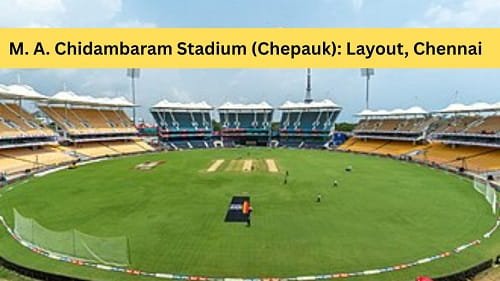
 Chepauk Stadium, officially known as the M. A. Chidambaram Stadium, is one of India’s oldest and most character-rich cricket grounds. Located in central Chennai, the stadium’s layout reflects decades of evolution rather than a single modern redesign. It is compact, inward-focused, and deeply shaped by its urban surroundings.
Unlike newer circular mega-stadiums, Chepauk feels enclosed and intense. The stands sit close to the playing area, creating an atmosphere where crowd noise stays trapped inside the bowl—one of the reasons it is known for its intimidating home advantage.
Chepauk Stadium Quick Overview
| Aspect | Details |
| City | Chennai |
| Established | 1916 |
| Seating capacity | ~38,000 |
| Ground type | International cricket stadium |
| Home teams | Tamil Nadu, CSK |
| Pitch nature | Spin-friendly |
| Location zone | Central Chennai |
Overall ground layout
Chepauk follows a traditional oval ground layout, but within tight city limits. The stadium is surrounded by major roads, the Marina coastline, and railway infrastructure, which restricts outward expansion. Because of this, development has focused on vertical stands and internal reconfiguration rather than horizontal spread.
The playing field is slightly smaller than newer venues, which keeps spectators visually close to the action.
Stands and seating structure
The stadium is divided into multiple named stands, each with a distinct viewing experience:
- Annamalai Stand – One of the oldest stands, known for a raw, close-to-the-field feel
- I, J, K Lower & Upper Stands – Centrally positioned, offering balanced sightlines
- MAC Stand – Premium seating with better elevation
- KMK Terrace – Elevated view, often preferred for tactical watching
- C, D, E Stands – Popular with energetic crowds and long-time local fans
Most stands are steep rather than wide, a design choice that maximises visibility in limited space.
Pitch block and square
Chepauk’s pitch square is centrally located and oriented to reduce sun interference during day matches. The square typically contains multiple pitches prepared from black soil, which contributes to:
- Lower bounce over time
- Increasing grip for spinners
- Tactical importance of winning the toss
The pitch block is compact, with short boundaries on certain sides, influencing field placements and scoring patterns.
Player and official zones
- Dressing rooms are positioned beneath the main stands
- Media and commentary boxes sit above central sightlines
- Match officials’ rooms and broadcast facilities are stacked vertically due to space limits
Movement within the stadium is more vertical than horizontal, which is unusual compared to newer designs.
Crowd flow and access
Entry and exit points are distributed around the stadium perimeter but remain constrained by surrounding roads and railway lines. This makes crowd movement slower during high-profile matches, though recent renovations have improved internal circulation and safety compliance.
Despite limitations, the stadium retains its old-world, lived-in character.
Why the layout still works
Chepauk’s layout may not be modern, but it serves cricket exceptionally well:
- Crowd proximity amplifies atmosphere
- Pitch behaviour rewards skill and strategy
- Compact design keeps matches visually engaging
- History and architecture add emotional weight
It is a stadium built for cricket, not spectacle.
Final perspective
The Chepauk Stadium layout is a product of time, space, and tradition. It doesn’t offer sweeping concourses or vast open plazas. Instead, it delivers intensity, closeness, and character. For players, it’s a tactical challenge. For fans, it’s an experience that feels personal and powerful. Chepauk may evolve, but its core layout—and soul—remain unmistakably intact.