 By TBLTeam
 Sir M. Visvesvaraya Layout—commonly called Vishweshwaraiah Layout or SMV Layout—is a well-developed, BDA-planned residential area in West Bengaluru, located around Ullalu and Nagarbhavi. Named after the legendary engineer Sir M. Visvesvaraya, the layout reflects disciplined city planning: clearly numbered blocks, wide internal roads, parks, and a strong focus on residential use.
Unlike many pockets that grew organically, SMV Layout was planned at scale. Spread across multiple blocks (with Block 2 and Block 5 frequently referenced), it offers a mix of BDA sites, independent houses, and apartment complexes. Over time, it has matured into a dependable address—quiet inside, well connected outside.
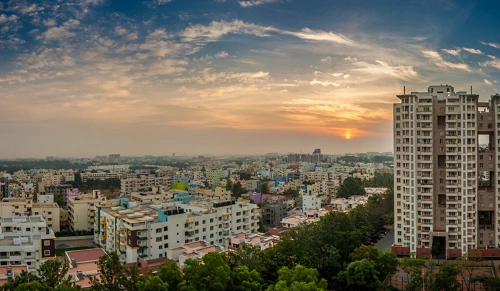
SMV (Vishweshwaraiah) Layout Overview
| Aspect | Details |
| Location | West Bengaluru |
| Parent areas | Ullalu, Nagarbhavi |
| Planning authority | BDA |
| Layout structure | Multiple blocks (e.g., Block 2, Block 5) |
| Housing mix | BDA plots, independent homes, apartments |
| Character | Planned, settled, family-oriented |
Planning at a city scale
SMV Layout stands out for its BDA-era planning discipline. Roads are laid out with clarity, plots follow standard dimensions, and public spaces—parks and green buffers—are built into the layout. This has helped the area age well, avoiding the congestion and infrastructure stress seen in many newer developments.
The block-wise structure makes navigation easy and civic management more organised, a subtle but important quality for long-term living.
Connectivity that supports daily routines
The layout benefits from multiple connectivity options. Road links toward Nagarbhavi, Kengeri, and Mysore Road make cross-city movement practical. Metro access via Kengeri and Nagarbhavi corridors strengthens public transport choices, while BMTC bus services support last-mile travel.
For professionals, this means predictable commutes toward West and Central Bengaluru without living on traffic-heavy main roads.
Homes, streets, and neighbourhood rhythm
Housing in SMV Layout is intentionally low- to mid-density. You’ll find:
- BDA-developed plots with custom-built independent homes
- Renovated older houses alongside newer constructions
- Apartment complexes placed without overwhelming the streetscape
Internal roads carry mostly local traffic, preserving a calm residential environment. Many residents are owner-occupiers, which adds to stability and community continuity.
Everyday amenities within reach
SMV Layout is well supported by surrounding infrastructure. General stores, supermarkets, petrol pumps, gyms, clinics, schools, and hospitals are easily accessible within and around the layout. Cinemas and larger retail clusters in nearby neighbourhoods reduce the need for long trips.
This everyday convenience is one of the reasons the layout remains attractive even as the city expands outward.
Proximity to work zones (without the noise)
While not sitting inside an IT park cluster, SMV Layout maintains reasonable proximity to employment hubs across West and South-West Bengaluru. This “near but not inside” positioning keeps residential life quiet while still serving working professionals.
Property landscape and buyer interest
From a property perspective, SMV Layout is end-user heavy with steady investor interest. BDA sites and independent homes are particularly sought after, with values varying by block, road width, and plot size. Price movement here tends to be gradual and resilient, reflecting livability rather than speculation.
Why SMV Layout continues to hold relevance
SMV Layout’s strength lies in planning maturity. Infrastructure is already in place, neighbourhood patterns are stable, and civic services are well integrated. In a city where many areas are still “upcoming,” SMV Layout offers certainty.
Overall, Sir M. Visvesvaraya Layout (SMV Layout) represents old-school Bengaluru planning done right—spacious, organised, and residential at heart. Anchored around Ullalu and Nagarbhavi, supported by BDA infrastructure, and connected by metro and arterial roads, it remains a solid, long-term neighbourhood for those who value order, access, and a lived-in sense of place.